Thursday, March 14, 2013

Big Adjustments


On Monday night, there was a Study Abroad Night, in which students who are interested in studying abroad can meet and play games and eat snacks with students who have already studied abroad.  I attended, and while I didn’t talk to too many interested students, I did reminisce with my fellow London travelers about all of our interesting and often hilarious moments abroad.  Replaying all of those memories made me realize that I am homesick for London sometimes.
We were warned that when we came back the US we would experience this kind of backwards homesickness.  It seemed strange to me that I would have culture shock when I returned home, but I did.  Especially when I came back to LVC.  The first few days of this semester were kind of hard for me, and it was a lot of change to deal with.  First of all, I had to adjust back to living in a tiny dorm room again, not a furnished apartment.  In addition, since I had a small selection of rooms to choose from when I returned, I ended up on the third floor among a bunch of noisy freshmen.  I got over it eventually, but at first I felt really strange sitting in my room, and having to share the bathroom my whole floor again.  It was also kind of a let down to go back to eating Metz food after being able to cook all of my meals in my apartment.  It was like I got a taste (no pun intended) of real life and really living on my own and then I had to return to being more dependent.
            The workload of my schoolwork was also much easier when I was abroad.  I only had four classes from Tuesday to Thursday, so I had a four-day weekend every week.  I wasn’t really assigned any reading or homework, and I didn’t have any exams to study for.  All I had to do was write essays at the end of the semester.  Coming back to five classes, five days a week at LVC was a little challenging.  I still feel like I don’t have any motivation to do homework anymore.  I was also accustomed to having lots of free time, which was nice because I could explore pretty much the entire city over the course of the three months I was there.  Now more than ever I realize how excruciatingly small Annville is.  I was used to being able to walk or take the tube or buses anywhere I needed to.  Now that I’m back in Annville, there is not much to do that is in walking distance, and when you don’t have a car on campus, you are a little bit stranded.  I severely miss just being a short tube ride away from Hyde Park, Buckingham Palace, Oxford Street, and other exciting attractions.  There is a virtually endless list of activities that you can do whilst in London.  It made me very spoiled when I came back to Annville.
            It was also very strange when I came back to campus and I felt like I didn’t know anyone.   I don’t know if it’s just because I didn’t know the freshmen class, but I felt extremely disconnected from the rest of the students.  It was definitely a bit of a depressing feeling.  I’m glad that I had friends here who also studied abroad who could relate to me.  I also sorely miss all of the friends that I made while I was abroad.  It’s kind of heartbreaking when I think that I will most likely never see most of them ever again.  I would never regret making them though. 
            I don’t know if I will ever fully return to how I was before I went to London, I hope I don’t.  I hope that I can maintain the changes that happened to me.  And I really hope that I can adjust to considering both the US and the UK as my home.

Tuesday, February 26, 2013

Money, Money, Money


Unfortunately, money is one of the most important things you need to consider before studying abroad.  I had to save a lot of money in order to go London, and even then I had to skip out on some of the trips to different countries because I couldn’t afford to travel to every single country that I was planning on visiting.  I had to pay roughly 45 dollars every week for my transportation on the underground and buses.  I had to pay for groceries.  Count in souvenirs and the ridiculous exchange rate between dollars and pounds and I was pretty much broke.
            Exchange rates are something that you might want to consider when you decide which country you want to study abroad in.  For a lot of countries, like Australia and New Zealand, the exchange rate is pretty similar to the US.  In other countries, like Argentina, the dollar is worth a lot more once it’s converted.  In most European countries, however, the dollar is very weak, which means that whenever you convert your money, you are losing some of it.  Almost all of the European countries use the euro for their currency, so that makes it easier when you travel around to different countries.  When you convert dollars, to euros, however, the conversion rate is 1 to around 0.75.  It may not seem like a big difference, but it is.  When you buy something for 20 euros, but really you are buying it for 26 dollars.  It was even worse for me after I converted my money to pounds.  I had to keep in mind that I was not spending 20 dollars, but actually 30 dollars.  I had to be very conscious of the exchange rate or I would have very quickly run out of money.  My friends who were studying in Greece visited me for a few days and were in shock at how quickly their money dwindled.  It was kind of amusing that they now understood my pain of spending money those three months I was in London.
Below I have listed all of the exchange rates (currently, they change all the time) for all of the locations that LVC offers in their study abroad program:

Euro (Greece, France, Ireland, Spain, Italy, Germany):  $1 converts to 0.764 Euros
Pounds (England):  $1 converts to 0.659 pounds
Australian dollar:  $1 converts to 0.971 Australian dollars
Argentine peso (Argentina):  $1 converts to 5.034 Argentine pesos
Yuan Renminbi (China):  $1 converts to 6.235 Yuan Renminbi
New Zealand dollar:  $1 converts to 1.195 New Zealand dollars

Friday, February 22, 2013

The Dreaded Culture Shock


Research shows that up to 70 percent of students experience homesickness when they first start college.  I couldn’t find a statistic for how many students experience homesickness when they arrive in another country to study abroad, but I’m sure that it is a much higher number.  Starting college for the first time is it’s own kind of culture shock.  You are somewhat living on your own, you have a school workload that you aren’t used to, you have to adjust to living with a roommate, and you have to worry about making new friends.  It’s a lot of stress.  Now add traveling to a country you have never been to before, and you will most likely end up a nervous wreck.
            I am usually a calm and composed person, and I consider myself to be pretty flexible.  Traveling has definitely helped transform me into a more flexible person.  When I was sixteen I went on a mission trip to India with my grandmother and two other women.  I was unbelievably excited for the trip, but when I arrived and the unimaginable heat and stink and noise of the city of Delhi hit me, it felt like I was on another planet.  I remember lying awake that first night in Delhi and crying because I just wanted to go home.  However, I got over it and was able to have an amazing two weeks that changed my life and my perspective. 
            While I did not cry on my first night in London, I did lay awake that first night and completely stressed out about all of the new things that I experienced in my first day of being there.  I have virtually no sense of direction, so I was terrified that I would get lost if I ventured outside of my apartment.  I didn’t have Internet for the first week so I was pretty much starved of any contact with my family.  I never had to cook for myself before, and I had no idea where to start.  On the first trip to the grocery store I bought some grapes, bread, cheese, and a few prepackaged meals.  Not a great start. 
            I learned to adapt to these changes; it just took time.  That is the best advice I can give to those who are experiencing culture shock and homesickness.  Another is just getting out of your apartment and exploring the country you live in.  You will be amazed at how much you will come to love the country and actually feel homesick for it when you come back home.

Sources:
www2.warkwick.ac.uk

Sunday, February 17, 2013

"How was your trip?"


Last Saturday, I attended a family reunion on my dad’s side of the family.  Most of them live at least an hour away from me, so I don’t get to see them very often.  Of the family members that knew I was in England last semester, the first question out of every one of their mouths was of course, “How was your trip?”
            I don’t think people realize how difficult that question is to answer.  I was living in another country for three whole months, how can possibly sum up three months in a couple of sentences?  So I answered with my usual, “It was amazing!” and just leave it at that. 
You see, I never know if people are generally interested in what I have to say about my experiences, or if they are just asking to be polite.  If they are the latter, I don’t want to bother them telling them things that I found exciting, when they probably will have no idea what I am talking about.  Even if they are genuinely interested and ask specific questions that I can actually answer, they still aren’t as interested as I expect them to be.  Jill Russell, the study abroad adviser, warned us about this.  She told us to expect that people would not be as interested in our stories as we expect them to be.  It’s not that they are apathetic or think I am boring, it’s just that they don’t understand.  Jill also warned us that we would have a hard time putting our experiences into words.  Even though I knew to expect it, it still frustrated me.
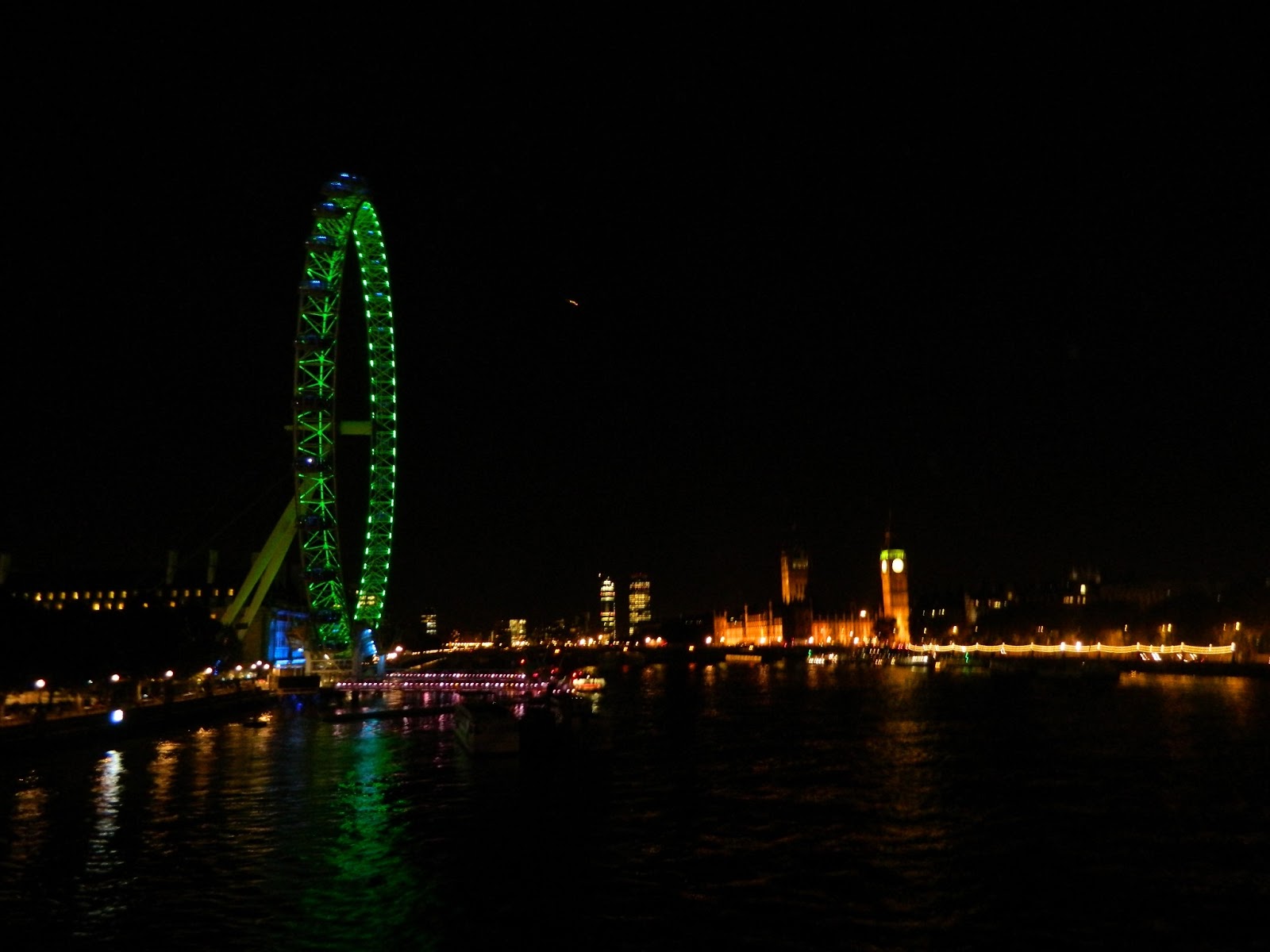
How can I explain in words what it felt like to stand before the vast Loch Ness? Or walking on the street where one of my favorite TV shows was filmed, or eating in the restaurant where J.K. Rowling wrote the Harry Potter books?  How could I describe how enraptured I was with the British culture?  Or how impossibly happy I was the first time I saw Big Ben, or walked beside the Thames, and realized that I was actually in London, the place I had been dreaming about all of my life.  It’s impossible.
I think part of the reason that I have such a hard time with this is that I find it very difficult to talk about myself and my feelings.  Now this trip is part of me, part of what defines me, so for me it is naturally difficult to express it.  One thing that I find helps get your stories moving is pictures.  I know I keep stressing taking tons of pictures but it’s the best way to preserve your memories and bring you straight back to that time in your life.  So whether you are back in the US for five months, five years, or fifty years, you will still be able to tell people everything about that experience. 
So take your pictures to family reunions.  Show them to your roommate.  Show them to everyone who will listen.  You were on an amazing journey that a small percentage of college students embark on.  Show it off and be proud.

Wednesday, February 13, 2013

Traveling Taboos


When you travel to a different country, there can be cultural barriers that will most certainly cause you to stick out as a foreigner.  Most of the time, these mistakes will only cause mild embarrassment.  Other times, however, they can cause serious offense.  Hand gestures, phrases, or other actions may seem harmless to your home country, but if you are traveling, they could cause people of that country to dislike you or jump to the wrong conclusions about you.  Here are a few gestures and actions that have different meanings from the US:

Showing two fingers: In the US, putting two fingers up is the “peace sign,” but in Britain, having two fingers up and facing your palm inwards is the equivalent of the middle finger.

Showing your open palm with the fingers open – We might use this gesture to greet someone.  It also often means “stop.”  In Greece, however, it is extremely offensive and means that you think that person is beneath you.

The “okay” sign – It means “money” in Japan, and “zero” in France, but in Brazil, it
means ... ahem, something dirty that you can look up for yourself.

Salt – Putting salt on your food in Egypt is considered an insult to the chef.

Showing the bottom of your foot – In the Middle East and Thailand, the feet are the lowest part of the body, so if you are crossing your legs and showing the bottom of your foot, that is considered offensive.

Sticking your tongue out – This is considered a friendly greeting in Tibet, instead of an insult.

Taxi manners – It is considered rude if you sit in the back seat when you ride in a taxi in Australia, where everyone is considered equal.

Thumbs up – This can be an aggressive gesture similar to the middle finger in some countries.  If you are certain parts of the Middle East and give someone a thumbs up, you are asking them for sex … oops.

Giving flowers – Make sure you give flowers when you are in the Ukraine in an odd number; an even number of flowers are for funerals.  Yellow flowers are used for funerals as well.

Finishing your food – In Cambodia, if you finish your plate insults the host by saying that they didn’t give you enough food.  On the other hand, not eating all of the food on your plate is considered rude in Greece.


Sources:
www.parkridgeflyusa.com
news.travel.aol.com
blog.tours4fun.com

Tuesday, February 5, 2013

Helpful Hints


I’ll be giving a lot of advice throughout this blog, but here are a few quick tips:

Keep a diary – You tell yourself that you will remember everything, but you won’t.  That’s what I told myself when I was abroad, and now I really wished I had wrote down my experiences.  It is also a good way to see how much you have grown from the beginning to the end of the trip.

Pack light – I know it might be painful for you to sort out your clothes and shoes and to pack only what you need, but TRUST ME, you can live without most of your wardrobe.  It makes it so much easier if you have less stuff to worry about getting lost.

Have a budget – Keep track of how much money you are spending, but don’t kill yourself trying to save every penny.  You have most likely saved money to go on this trip, so you should use it.  That’s what it’s for.  Bearing that in mind, it is very easy to blow money without even thinking about it.  Just keep in mind roughly how much you want to spend every week, but allow yourself to splurge every now and then.

Take advantage of every opportunity – If you want to do something, do it.  You may never get the chance to go back to that country, so you don’t want to miss out on an experience that you will regret not doing in the years to come.

Take TONS of pictures – I took over a thousand pictures when I was abroad and I don’t regret it at all.  These pictures are what you will be remembering your trip by.  Don’t feel stupid if you whip out your camera every second.  This is a momentous time in your life, and you need to document it.  For the rest of your life you will look back on those pictures and recall some of the best days of your life.  So get a camera card with lots of memory and fill it up!

Saturday, February 2, 2013

Studying Abroad at LVC


Spain.  Ireland.  Argentina.  England.  China.  Australia.  Germany.  France.  New Zealand.  Italy.
            The study abroad program here at LVC provides students who are interested in studying abroad give a diverse group of countries to choose from.  I met a lot of other students who were studying abroad when I was in London, and in my opinion, we had a better program than they did.  One girl had to pay for her own rent for her apartment.  LVC takes care of that for you; you just have to pay for normal tuition.  London’s rent is ridiculous.  If I had to pay for it on my own, I don’t know if I would have been ever been able to spend money on anything else.  I also thought that our accommodations were much nicer than other students’.  We had a lot more freedom living in actual apartments rather than living in student housing like they did. 


I can honestly say that I feel more prepared for “the real world” now that I have lived in London.  I could easily navigate through the city by myself towards the end of the trip, and it felt incredible to be that independent.  I would never have dreamed of flying and trying to go through an airport by myself, but I flew to and from England on my own.  I am so much more confident now, and I think I know myself a little bit better.  Going through an experience like that definitely shows you who you really are.  I would encourage, no, PLEAD with every young person I know to at least consider studying abroad.  You won’t regret it.


Scotland Highlands
Tower Bridge


Big Ben

Eiffel Tower

Stonehenge
National Gallery at Trafalgar Square


London Eye